 blog
Is There a Better Steeda Alternative for Muscle Cars?
Last Updated: October 25, 2026
Quick Summary
The best Steeda alternative depends on your chassis and goal: BMR Suspension for drag and traction hardware, Vogtland for value lowering springs, and American Car Craft for show-car finish. Verify your exact model year, trim, and whether your car uses IRS or a solid axle before ordering any part.
- Steeda favors progressive spring rates and street-friendly damping for balanced street handling.
- BMR leans toward stiffer components and adjustable rear sway bars for drag builds.
- Vogtland springs offer a modest drop and near-stock rates for daily comfort.
- The S197 uses a solid-axle rear while the S550 and S650 moved to independent rear suspension.
- Budget for a four-wheel alignment after any ride height change.
Table of Contents
- What Muscle Car Owners Actually Want From a Steeda Alternative
- Steeda vs. BMR Suspension: Handling and Ride Quality Compared
- Steeda vs. Vogtland Springs: Spring Rates, Drop, and Daily Comfort
- The Best Mustang Suspension Brands and What Each One Does Best
- Fitment, Model Years, and Total Installed Cost: What to Check First
- Stainless Steel vs. Carbon Fiber Car Accessories: Which Finish Wins
- Browse American Car Craft Accessories for Your Build
- Frequently Asked Questions
What Muscle Car Owners Actually Want From a Steeda Alternative
The search for the best Steeda alternative for muscle cars usually starts the same way: an owner wants sharper handling, a lower stance, or a show-ready look, but the Steeda catalog doesn't quite match their budget, their platform, or their goals. At American Car Craft, we've spent over 30 years around muscle car builds, and we hear the same priorities again and again: honest fitment, predictable ride quality, and parts that look as good as they perform.
Steeda built its reputation on Ford Mustang suspension and performance hardware. That focus is real, and for many Mustang owners it's the right starting point. But a Steeda alternative makes sense when you drive a Challenger, a Charger, a Camaro, or a classic build, or when your priorities lean toward appearance and fitment rather than track tuning.
Here's what most buyers actually want from an alternative:
- Fitment you can trust across specific model years and trim packages
- Ride quality that survives daily driving, not just weekend runs
- A clear path from stock suspension to a handling improvement you can feel
- Value measured as total installed cost, not just the part price
- Looks that hold up under car show lighting
Below, we'll break down how the major suspension brands compare, what spring rates and drop actually mean for comfort, and how to choose based on your driving goal and platform.
Steeda vs. BMR Suspension: Handling and Ride Quality Compared
BMR Suspension is the stronger pick for hard-launch traction and drag-oriented builds, while Steeda is the more balanced choice for street handling. That's the short answer. The longer answer depends on what you do with the car.
Steeda's suspension upgrade packages tend to favor progressive spring rates and street-friendly damping, which keeps ride comfort reasonable on rough pavement. BMR leans toward stiffer components, adjustable rear sway bars, and parts aimed at eliminating wheel hop under hard acceleration.
A few practical differences matter most:
- Street use: Steeda's progressive spring approach usually rides better over broken pavement
- Track use: BMR's stiffer rates and adjustable sway bars give more tuning range
- Drag use: BMR's traction-focused hardware addresses wheel hop more directly
- Cost: both brands sit in the premium aftermarket tier, so compare total installed cost
Watch out: buying stiffer springs without matching shocks and dampers is the most common mistake we see. Stiff springs on stock dampers produce a bouncy, harsh ride that owners blame on the springs.
Steeda vs. Vogtland Springs: Spring Rates, Drop, and Daily Comfort
Vogtland springs are the value-oriented option for a modest drop and near-stock comfort, while Steeda springs offer more tuning depth for handling-focused builds. If your goal is a cleaner stance without wrecking daily ride quality, Vogtland is worth a hard look.
Spring rate is the load needed to compress a spring a given distance. A higher rate means less body roll and sharper cornering, but also a firmer ride. Progressive springs start soft and stiffen under load, which is why they're popular for daily drivers.
Here's how to think about the trade-off:
- Spring drop: a mild drop keeps alignment in spec and preserves ride height for driveways
- Progressive spring design: better ride comfort at low speed, firmer control in corners
- Stock suspension replacement: budget for new shocks and an alignment at the same time
- Daily driver priority: comfort first, then handling improvement
A common mistake is chasing an aggressive drop for looks alone. Beyond a certain point, you'll fight scraping, camber wear, and a harsh ride on every commute.
The Best Mustang Suspension Brands and What Each One Does Best
Start with the chassis, because spring and damper fitment is generation-specific. The S197 (2005-2014) uses a solid-axle rear; the S550 (2015-2023) and S650 (2024+) moved to independent rear suspension (IRS). A spring or bar that transforms an S197 will not bolt onto an S550, and IRS cars respond differently to rear bar changes than solid-axle cars do.
Here is how the major brands map to real builds:
- Steeda (S197, S550, S650): progressive-rate springs, matched dampers, and subframe-to-chassis bracing. Best when you want one coherent street package rather than mixed parts. Their IRS subframe support and jacking rails are commonly paired with spring swaps on S550 cars.
- BMR Suspension (S197, S550, S650): stiffer linear-rate springs, adjustable rear sway bars, and traction hardware aimed at wheel hop. The adjustable rear bar is the tuning lever drag and autocross owners reach for; on IRS cars it lets you dial rear roll stiffness without changing springs.
- Vogtland (S197, S550): lowering springs with a modest drop and near-stock rates. The value pick when stance and daily comfort matter more than lap times.
- American Car Craft (all generations): stainless steel and carbon fiber exterior and engine bay trim. This is the category most suspension guides skip, but a car that handles well and looks stock under the hood does not win shows. If you are planning a build, browse our Mustang accessories to see how the finish side comes together.
A practical decision matrix by goal:
| Driving goal | Priority part | Brand lean |
|---|---|---|
| Daily driving with a lower stance | Progressive springs + matched dampers | Steeda or Vogtland |
| Drag racing / hard launches | Rear traction hardware + adjustable rear bar | BMR |
| Autocross / track days | Linear springs + adjustable bars + subframe bracing | BMR or Steeda |
| Show car | Finish and fitment first | American Car Craft |
Most owners eventually combine categories: suspension first, then appearance. Decide which matters more to you and budget accordingly. The mistake is buying a brand name instead of a system, a BMR rear bar on stock springs, or Vogtland springs on worn dampers, will not deliver what the label promises.
Fitment, Model Years, and Total Installed Cost: What to Check First
Verify three things before buying any suspension part: exact model year and trim compatibility, whether your car uses IRS or a solid axle, and the total installed cost including alignment and labor. This section claims the gap most competitors miss: a verified fitment guide by chassis generation plus a consistent total-installed-cost framework, instead of scattered forum anecdotes.
Fitment is where most returns originate. A spring listed for "modern muscle cars" may fit a 2015-2023 S550 Mustang but not a specific performance trim with different spring perches, and a rear bar for an S197 will not bolt to an S550 IRS cradle. The chassis generation is the first filter, not the brand.
Use this compatibility guide before you order:
- S197 Mustang (2005-2014): solid-axle rear. Rear bars and traction hardware are axle-mounted; IRS subframe parts do not apply.
- S550 Mustang (2015-2023): independent rear suspension. IRS subframe support, jacking rails, and cradle-lock kits are commonly paired with spring swaps.
- S650 Mustang (2024+): IRS carryover with revised mounting points. Confirm the part listing explicitly names the S650 before ordering.
- Challenger / Charger (LX and LA platforms): separate spring and bar fitment by model year and trim; do not assume a Mustang part crosses over.
- Camaro (Alpha platform, 2016+): IRS with its own spring perch geometry; verify trim-specific listings.
Then run the total-installed-cost math, not the sticker price:
- Confirm your exact model year and trim package against the part listing
- Check whether the part is designed for IRS or solid-axle rear suspension
- Ask whether subframe support or jacking rails are recommended alongside
- Budget for a four-wheel alignment after any ride height change
- Factor in labor if you are not doing the install yourself
- Confirm the warranty terms in writing, including whether aftermarket springs void a damper warranty
A cheaper spring that requires extra hardware and a second alignment often costs more than a complete kit. The same logic applies to bars: an adjustable rear bar with the wrong end links can cost more in rework than a matched set.
Stainless Steel vs. Carbon Fiber Car Accessories: Which Finish Wins
Stainless steel wins on durability and easy care, while carbon fiber wins on weight and a modern performance look. For most show-car builds, the right answer is a mix of both.
Stainless steel accessories resist corrosion, clean up with a simple polish, and hold a mirror finish under show lighting. Carbon fiber brings a woven texture and lighter weight, and it pairs naturally with performance-focused builds.
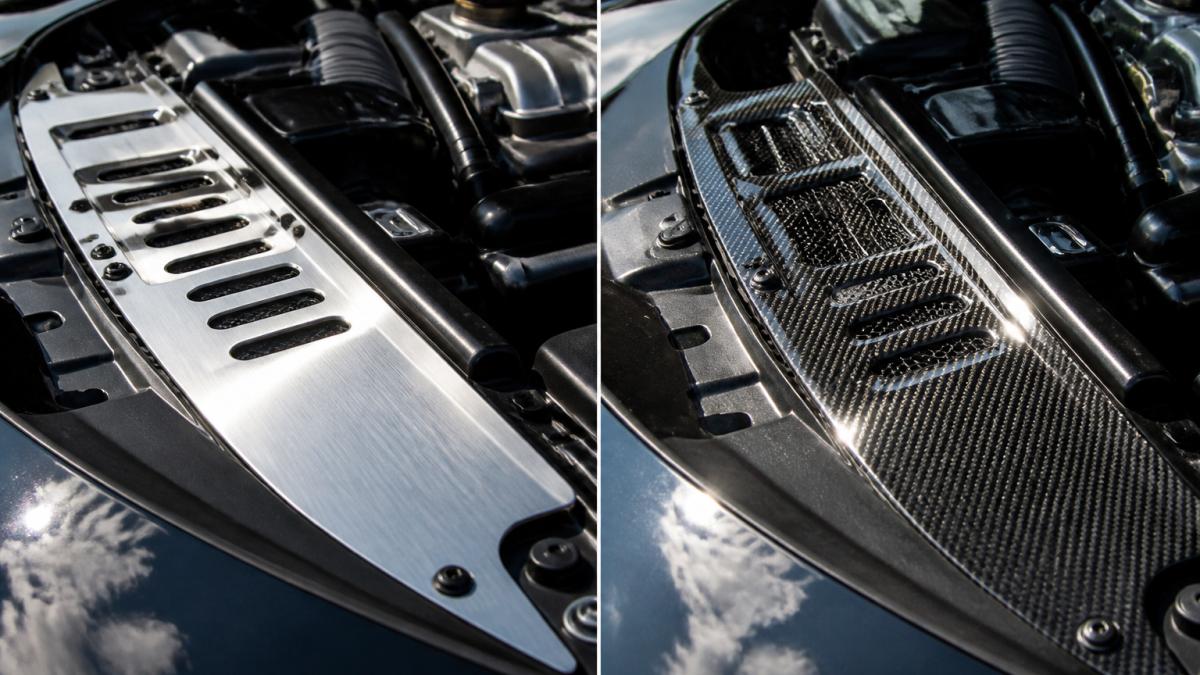
What most guides miss is that the two finishes solve different problems. Stainless handles engine bay heat and road grime well. Carbon fiber shines on exterior accents where weight and texture matter.
Our advice: use stainless steel where durability and cleaning matter most, and carbon fiber where you want visual contrast. You can shop Ford Mustang exterior accessories and explore carbon fiber exterior accessories to compare both finishes side by side.
Browse American Car Craft Accessories for Your Build
Suspension gets your muscle car handling right. The finish is what makes people stop at your car at a show.
We handcraft premium stainless steel and carbon fiber accessories in Hudson, Florida, with over 30 years of experience and official licensing from General Motors, Ford, and Mopar. Every piece is precision laser-cut for exact dimensions, so fitment isn't a gamble, and most installs are straightforward enough for a DIY weekend.
If you're building a Challenger, shop our Dodge Challenger accessories. For Charger owners, browse Dodge Charger accessories built for interior, exterior, and engine bay upgrades.
Frequently Asked Questions
What are the best alternatives to Steeda for muscle car parts?
It depends on what you are upgrading. For suspension, BMR and Vogtland are common Steeda alternatives, with BMR favoring handling-focused setups and Vogtland offering progressive lowering springs. For appearance and trim, American Car Craft makes handcrafted stainless steel and carbon fiber accessories that are officially licensed by GM, Ford, and Mopar. Compare spring rates, fitment for your exact model year, and total installed cost before choosing a Steeda alternative for your build.
Is BMR or Steeda better for Mustang suspension?
Neither is universally better. BMR leans toward drag and handling setups with a broad catalog of control arms, subframe supports, and sway bars. Steeda offers a long-established lineup of springs, dampers, and IRS-focused parts with a strong daily-driver reputation. The deciding factors are your driving goal, your platform year, and whether you want a complete matched system or individual components. Check spring rates and compatibility with your trim package before ordering.
Are Vogtland springs a good alternative to Steeda springs?
Vogtland lowering springs are a reasonable alternative if you want a moderate spring drop and progressive spring rates for street use. They tend to suit owners who want a lower ride height without a harsh daily driver feel. Steeda springs often pair with their own dampers and sway bars as a matched system. Compare advertised drop, spring rate, and warranty terms, and confirm fitment for your specific model year and trim before buying.
What should I compare when choosing aftermarket parts for a muscle car?
Start with verified fitment for your exact model year and trim, then compare material quality, installation difficulty, and warranty coverage. For suspension, look at spring rate, ride height change, and whether the part works with stock components. For accessories, weigh stainless steel vs. carbon fiber car accessories on durability, finish, and care requirements. Total installed cost, including alignment after a suspension change, matters as much as the part price.
Your suspension choice sets the handling. Your finish choice wins the show. Get started with American Car Craft and give your build the award-winning look it deserves.