 blog
Stainless Steel vs Carbon Fiber Car Accessories
Table of Contents
- Stainless Steel vs Carbon Fiber: Material Fundamentals
- Weight and Performance: How Each Material Affects Your Vehicle
- Real Carbon Fiber vs Carbon Fiber Look: Spotting the Difference
- Stainless Steel Car Trim Durability and Longevity
- Carbon Fiber vs Stainless Steel Automotive Trim: Aesthetics and Finish
- Carbon Fiber Car Accessory Maintenance and Care
- Cost, Installation, and Long-Term Value
- Which Material Should You Choose for Your Build?
- Frequently Asked Questions
Last Updated: October 18, 2026
Stainless Steel vs Carbon Fiber: Material Fundamentals
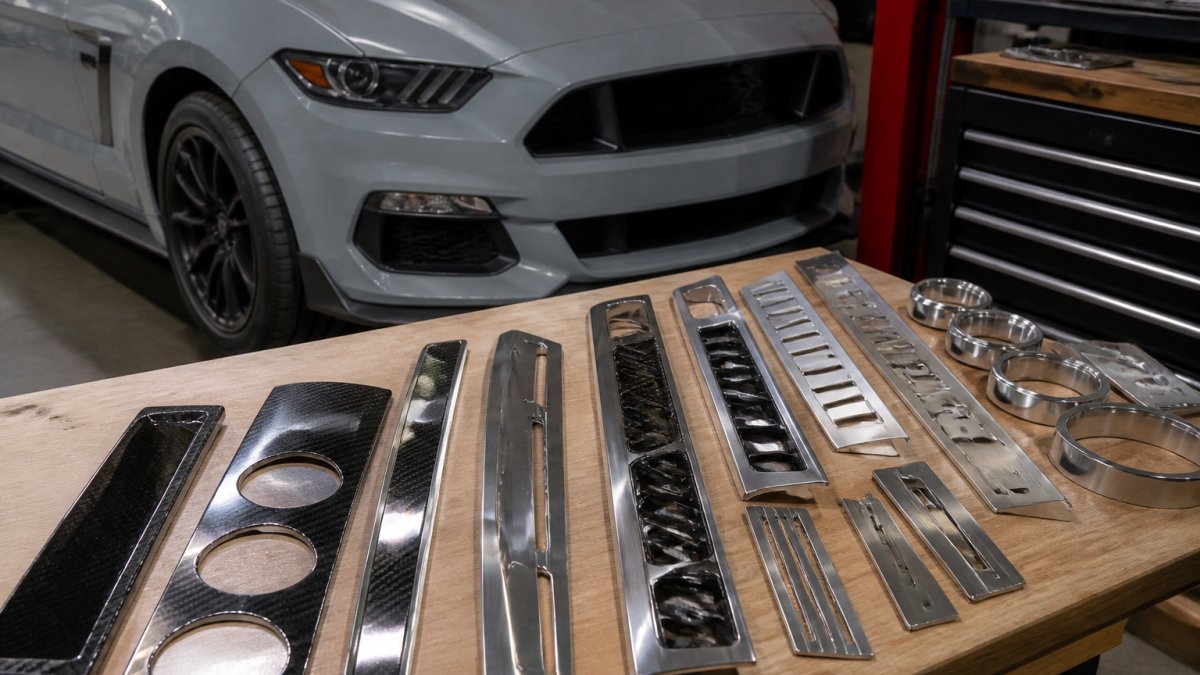
Stainless steel and carbon fiber are the two dominant materials for premium automotive accessories, each with distinct advantages depending on your build goals. At American Car Craft, we've worked with both for over 30 years, handcrafting precision laser-cut parts for muscle cars and exotics. Understanding the core differences between stainless steel vs carbon fiber car accessories is essential before committing.
Stainless steel is an iron-based alloy that resists corrosion through a protective oxide layer, making it exceptionally durable in harsh environments with minimal maintenance. Carbon fiber is a composite of thin carbon filaments bound in resin, significantly lighter than steel while maintaining an impressive strength-to-weight ratio that appeals to performance-focused builders.
Weight and Performance: How Each Material Affects Your Vehicle
Weight reduction is carbon fiber's headline argument, but the effect depends more on which accessory you replace than on the material label.
Carbon fiber composite has a density of roughly 1.5 to 1.6 grams per cubic centimeter; stainless steel runs 7.8 to 8.0. That's a material-level difference of about five times, but a finished part is never pure material.
Weight matters most as unsprung and high-mounted mass. Cutting mass at the hood and front fenders shifts the center of gravity rearward and slightly downward, felt as quicker turn-in and less understeer. Reducing mass at the wheels and brakes has an outsized effect because unsprung mass accelerates vertically over every bump as well as rotationally.
A commonly cited motorsport rule of thumb is that removing 10 pounds is roughly equivalent to adding one horsepower for acceleration, though the ratio depends on power-to-weight and gearing.
Stainless steel's performance story is often undersold. Being stiff and dimensionally stable, it's the better choice for brackets, trim rings, and mounting hardware that must hold alignment under heat and vibration.
Carbon fiber earns its premium on large, high-mounted panels and unsprung components where savings are big enough to feel. Stainless steel earns its premium on small, highly visible, high-contact parts where durability, precision, and finish drive the result.
Real Carbon Fiber vs Carbon Fiber Look: Spotting the Difference
This is where many buyers get burned. Real carbon fiber is expensive to manufacture and install. Carbon fiber wrap, a vinyl film printed with a carbon weave pattern, looks convincing from ten feet away but lacks the structural properties and durability of genuine composite material.
Real carbon fiber has an actual weave visible on the surface, with a glossy or matte resin finish that's part of the structural material itself. The weave is three-dimensional; you can feel texture when you run your hand across it.
Durability separates them dramatically. Real carbon fiber resists UV degradation, holds its appearance for years, and can be repaired. Wrap fades within 12-24 months in direct sunlight, peels at edges, and can't be effectively repaired once compromised.
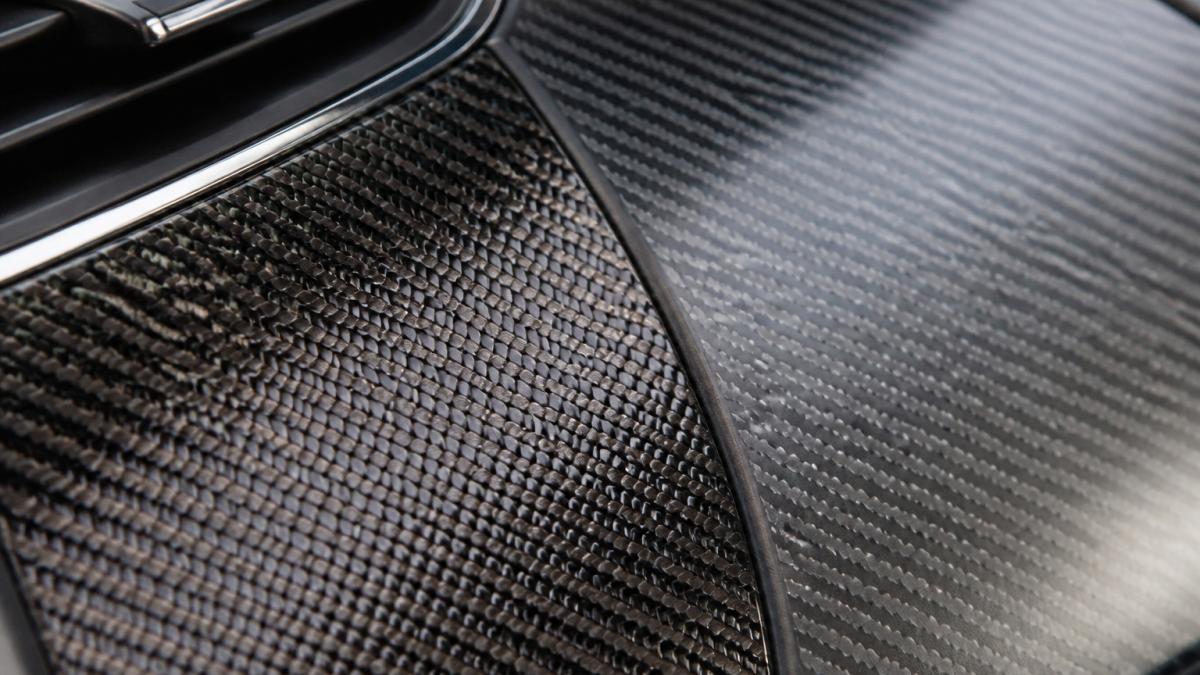
When evaluating carbon fiber accessories, ask whether the component is pre-finished real carbon fiber or a wrap. Real carbon fiber costs more upfront but delivers lasting value. American Car Craft sources only genuine carbon-fiber components, precision laser-cut for perfect fitment without gaps or edge imperfections.
Stainless Steel Car Trim Durability and Longevity
Stainless steel's defining characteristic is corrosion resistance. The protective oxide layer prevents rust even in harsh climates with road salt and moisture, which is why stainless dominates marine and coastal applications.
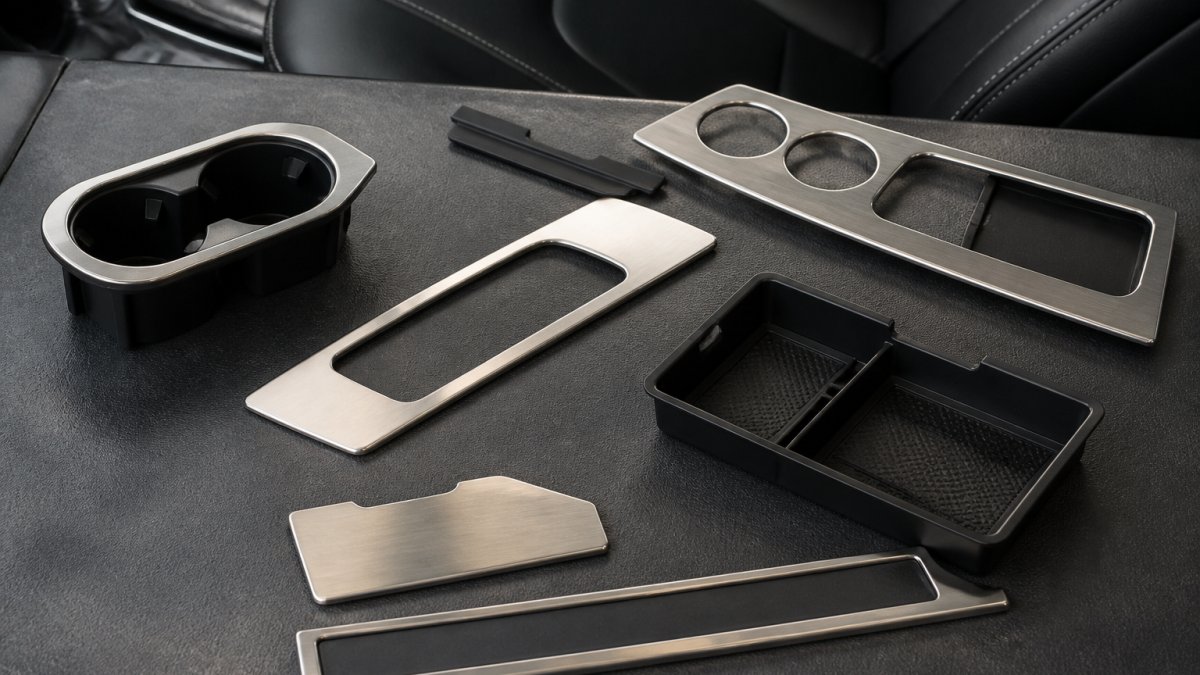
For automotive trim, stainless steel delivers multi-decade durability. Door handles, trim rings, window surrounds, and badging maintain their appearance and function with minimal maintenance, a quick rinse with soap and water, no special sealants or coatings.
Carbon fiber is extremely durable under normal conditions but vulnerable to UV exposure and moisture infiltration at damaged edges. A crack or chip can let resin degrade, compromising structural integrity. Stainless steel, even if scratched, won't experience progressive degradation from that damage.
The trade-off is finish options. Stainless steel can be polished to a mirror shine, brushed for a modern matte look, or left natural. Carbon fiber offers fewer variations, primarily glossy or matte resin, but delivers a distinctly modern, performance-oriented aesthetic that dominates contemporary show cars.
Carbon Fiber vs Stainless Steel Automotive Trim: Aesthetics and Finish
Aesthetics are subjective, but show-car trends reveal clear preferences. Stainless steel trim conveys craftsmanship, precision engineering, and classic elegance. Polished stainless badging, door handles, and trim rings create a high-end, hand-finished appearance that appeals to judges evaluating traditional muscle cars and classic hot rods.
Carbon fiber communicates performance and modernity. A carbon fiber hood, side vents, or rear diffuser immediately signals a performance-oriented build. Its visual weight is lighter, it doesn't dominate the eye the way a large polished stainless panel might, making it ideal for accent pieces that enhance rather than overpower the vehicle's original design.
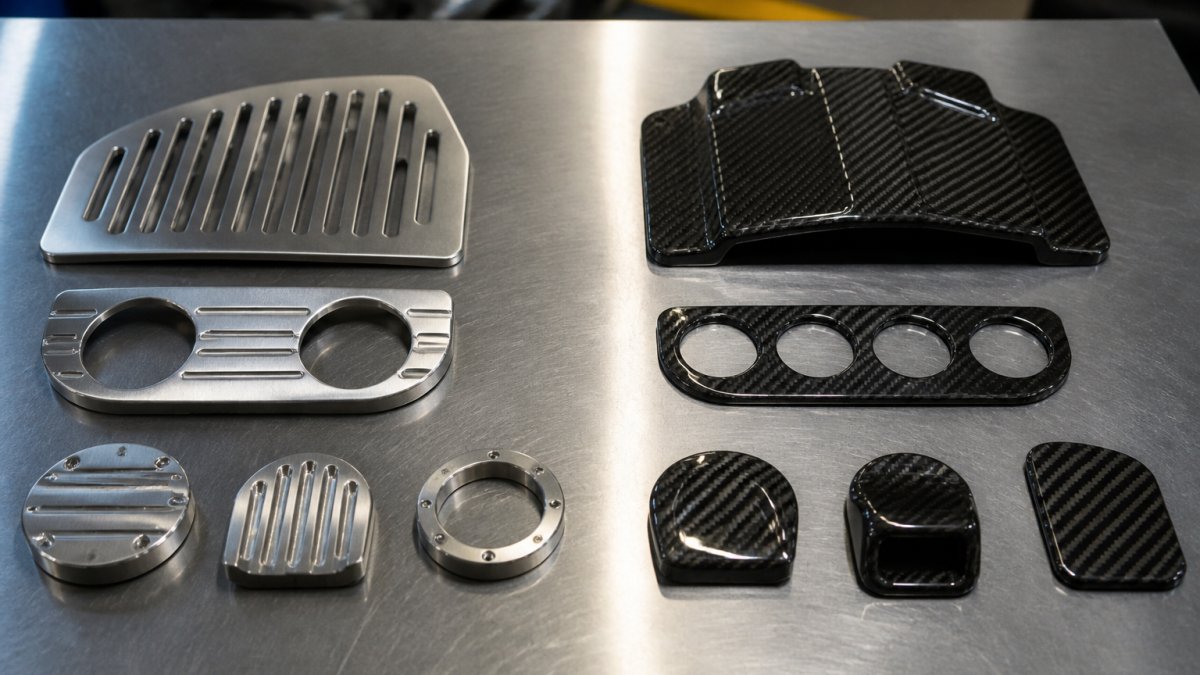
Many award-winning builds combine both materials strategically. A carbon fiber hood reduces weight while making a performance statement. Stainless steel trim rings and badging add precision and prestige.
Carbon Fiber Car Accessory Maintenance and Care
Real carbon fiber requires minimal maintenance but demands respect for its limitations. UV exposure degrades the resin matrix over time, causing yellowing and loss of gloss. Parking in shade or using a car cover during storage extends component life significantly.
Cleaning is straightforward: warm water, mild soap, and a soft microfiber cloth. Avoid harsh chemicals, abrasive sponges, and pressure washers, which can damage the resin finish or force water into seams. For stubborn contamination, use detailing clay bars designed for clear coats.
Minor scratches polish out with fine automotive compound and a foam pad. Deeper gouges or cracks require professional repair, a specialist can sand, fill, and re-finish damaged areas. That's why genuine carbon fiber from precision manufacturers like American Car Craft matters: superior initial quality means fewer repairs over the component's lifetime.
Stainless steel maintenance is even simpler. Regular washing prevents salt and mineral buildup. Polished stainless needs occasional polishing with stainless steel cleaner to maintain the mirror finish; brushed stainless needs only water and soap. Stainless doesn't degrade from UV exposure, making it ideal for install-and-forget components.
Cost, Installation, and Long-Term Value
Price is where the stainless steel versus carbon fiber decision gets real.
Carbon fiber is expensive for structural reasons. The raw material is costly, but the bigger drivers are labor and equipment: laying up plies by hand or with automated fiber placement, vacuum bagging or autoclave curing, trimming, sanding, and applying a UV-stable clear coat.
Stainless steel accessories sit in a narrower, generally lower price band. Laser cutting, forming, and polishing are mature, highly automated processes, and material waste is minimal.
Installation cost is often overlooked. Both materials are commonly engineered for DIY installation with basic hand tools, and many stainless trim pieces attach with automotive-grade double-sided tape or existing factory fasteners.
Repairability is the hidden cost line. A scratched stainless steel trim ring can often be polished or, at worst, replaced inexpensively.
Expected service life favors stainless steel on pure longevity. Its protective oxide layer is self-healing for minor surface scratches, and a polished or brushed finish can be maintained for decades with soap, water, and occasional polish.
Resale value cuts both ways. On a classic or muscle car, tasteful stainless steel trim is broadly appealing and reads as craftsmanship to a wide pool of buyers.
| Cost Factor | Stainless Steel | Carbon Fiber |
|---|---|---|
| Typical accessory price band | Low hundreds per piece or kit | Low hundreds for small cosmetic pieces; low thousands for hoods and large panels |
| Main cost driver | Laser cutting, forming, polishing | Hand layup, curing, finishing, scrap rate |
| DIY installation | Common; tape or factory fasteners | Common on small pieces; hoods and panels often need pins, hinge transfer, alignment |
| Repair after damage | Polish or replace inexpensively | Composites shop re-lay and re-clear; can approach new-part cost |
| Appearance service life | Decades with basic care | Many years if garaged; clear coat is a wear item in sun |
| Resale appeal | Broad, classic | Strong to performance buyers; narrower on traditional builds |
The bottom line on cost is that stainless steel is the lower-risk purchase: predictable price, easy installation, cheap repair, and a finish that holds up with minimal attention. Carbon fiber is the higher-ceiling purchase: more expensive up front and more demanding to own, but worth it when the weight savings are large enough to feel and the modern look is central to your build.
Which Material Should You Choose for Your Build?
The decision hinges on three factors: your vehicle's primary purpose, your climate, and your budget.
Choose carbon fiber if: You're building a performance-oriented vehicle where weight reduction translates to measurable improvements in acceleration or handling. You prefer a modern, aggressive aesthetic. You're willing to invest premium pricing for modern materials. Your vehicle spends most time in a garage or covered storage.
Choose stainless steel if: Your vehicle is primarily a show car where visual polish and precision matter more than performance gains. You live in a coastal climate or high-humidity region where corrosion resistance is essential. You want components that require minimal maintenance over decades.
Choose a combination if: You want to balance performance, aesthetics, and practicality. Use carbon fiber for high-impact components like hoods and vents. Use stainless steel for trim, badging, and contact areas where durability and precision shine.
American Car Craft's precision laser-cut components, available in both premium stainless steel and genuine carbon fiber, are engineered for perfect fitment and easy DIY installation.
Choosing between stainless steel and carbon fiber isn't a one-size-fits-all decision. The right material depends on whether you're chasing performance, aesthetic impact, or long-term durability. With over 30 years of experience and official licensing from General Motors, Ford, and Mopar, we deliver the distinctive, award-winning appearance your vehicle deserves.
Frequently Asked Questions
What's the main difference between stainless steel and carbon fiber car accessories?
Stainless steel offers corrosion resistance, durability, and a polished metallic look that's easy to maintain. Carbon fiber delivers lightweight performance, a premium aesthetic, and high strength-to-weight ratio. Stainless steel is heavier and less expensive; carbon fiber costs more but reduces overall vehicle weight and improves acceleration and handling. Your choice depends on whether you prioritize show-stopping appearance and performance or durability and ease of maintenance.
How can you tell real carbon fiber from a carbon fiber look finish?
Real carbon fiber has a visible weave pattern with distinct diagonal or crosshatch texture that feels slightly textured to the touch. Carbon fiber look (wrap or vinyl) appears flat and uniform under close inspection, with no tactile weave. Real carbon fiber is typically heavier, more rigid, and shows authentic resin coating. If the price seems too low or the finish looks too uniform, it's likely a wrap. Check product descriptions carefully, authentic carbon fiber components will specify 'real carbon fiber' or 'genuine composite material.'
Is stainless steel car trim durable enough for show cars and daily driving?
Yes. Stainless steel car trim durability is excellent for both show cars and daily use. The protective oxide layer resists rust and corrosion, making it ideal for long-term exposure to moisture and road salt. Stainless steel maintains its polished finish with simple cleaning.
What maintenance does carbon fiber car accessory care require?
Carbon fiber car accessory maintenance is straightforward but specific. Wash with mild soap and water; avoid harsh chemicals or abrasive pads that scratch the resin coating. Dry immediately to prevent water spots. Avoid prolonged UV exposure, which can fade the finish over time, use a UV-protective wax or cover when parked long-term. If the resin coating chips, repair it promptly to prevent moisture infiltration and delamination. Store indoors when possible.