 Listicle
Officially Licensed Ford Mustang Interior Parts for Show Cars
Last Updated: November 17, 2026
Quick Summary
Officially licensed Ford Mustang interior parts are produced under a formal agreement with Ford, so the maker can legally carry Ford branding while meeting Ford's design and fit standards. Licensing confirms brand authorization and design review, but it does not mean Ford built the part or that it is show-grade. Always verify fitment by generation, year, trim, and body style before ordering Mustang interior parts.
- Licensed, OEM, and aftermarket are three different labels that answer different questions about a part.
- A 1965-1966 dash pad will not fit a 1967-1968 car because the dash was reshaped.
- The 2005-2009 and 2010-2014 S197 interiors are effectively two different cabins.
- Buy trim kits as grouped sets so dye lots and grain patterns match across the cabin.
- Wipe mounting areas with isopropyl alcohol and test-fit pieces dry before peeling any backing.
Table of Contents
- Why Officially Licensed Mustang Interior Parts Matter
- Mustang Interior Parts by Year: Matching Generation and Trim
- Mustang Interior Trim Kits for a Show-Ready Cabin
- Ford Mustang Carbon Fiber Interior Parts: What to Expect
- Floor Mats, Seats, and Upholstery Upgrades That Hold Up
- Dash, Console, Door Panels, and Pedal Covers
- Using a Ford Mustang Parts Catalog Without Getting Burned
- Installing Your Interior Parts and Keeping Them Show-Ready
- Frequently Asked Questions
Why Officially Licensed Mustang Interior Parts Matter
Officially licensed Ford Mustang interior parts are components produced under a formal agreement with Ford, so the manufacturer can legally carry Ford branding while meeting the design and fit standards Ford sets for the parts that go in your car.
Here is the part most buyers get wrong: "licensed" and "OEM" are not the same thing, and neither one is a guarantee of show-quality finish on its own.
Licensed, OEM, and Aftermarket: What the Labels Actually Mean
Officially licensed means the part maker has a licensing agreement with Ford and can use Ford's name and trademarks.
Genuine OEM means the part was made by or for Ford as original equipment or a factory replacement.
Aftermarket covers everything else. Quality ranges from excellent to unusable, and the label tells you nothing about which you're getting.
The practical difference shows up in three places: fitment documentation, material consistency, and whether anyone stands behind the part when it doesn't sit flush.
Mustang Interior Parts by Year: Matching Generation and Trim
Fitment is where most returns start, and model year alone is not enough to get it right.
Work through these five checks before you order:
- Generation: Classic (1964.5-1973), Fox Body (1979-1993), SN95 (1994-2004), S197 (2005-2014), S550 (2015-2023), and S650 (2024 and later) share almost no interior dimensions.
- Model year within the generation: mid-cycle refreshes change dash and console shapes. The 2010 S197 interior is not the 2005-2009 interior, and the 2018 S550 dash and center stack differ from the 2015-2017 cars.
- Trim level: base, GT, EcoBoost, Mach 1, Bullitt, and Shelby cars differ in cabin appointments, gauge clusters, and seat design.
- Interior configuration: screen size, console layout, seat type (base cloth, leather, Recaro), and whether the car has a manual or automatic shifter surround all vary by option package.
- Body style where it matters: convertible door panels and rear quarter trim differ from coupe pieces on several generations, so confirm the listing names the body style.
Generation-by-generation, here is what actually changes and why it breaks fitment:
- Classic (1964.5-1973): dash pads, gauge bezels, console plates, and door panels are year-specific, and reproduction parts are often licensed or Ford-tooled reproductions rather than modern overlays. A 1965-1966 dash pad will not fit a 1967-1968 car; the dash was reshaped.
- Fox Body (1979-1993): the dashboard, console, and door panel designs changed multiple times across the run, and the 1987-1993 "aero" interior is materially different from the 1979-1986 cars.
- SN95 (1994-2004): the 1994-1998 and 1999-2004 ("New Edge") cabins differ in dash, console, and door panel shape, and the 2003-2004 Cobra and Mach 1 seats and gauge clusters are their own fitment case.
- S197 (2005-2014): the 2005-2009 and 2010-2014 interiors are effectively two different cabins; console overlays, dash kits, and door trim do not interchange.
- S550 (2015-2023): the 2015-2017 and 2018-2023 center stacks, dash trim, and digital cluster surrounds differ, and Shelby and Mach 1 cars add their own seat and trim variations.
- S650 (2024 and later): the dual-screen dash layout changes where trim overlays can mount, and the console and door panel geometry is new.
A seller who publishes fitment by generation, year, trim, and body style gives you the detail needed to verify fit. A vague claim such as "fits most modern Mustangs" gives you no way to check it.
Each Mustang generation has its own cabin dimensions, and mid-run refreshes split several generations into two distinct interiors.
| Generation | Years | Fitment note |
|---|---|---|
| Classic | 1964.5-1973 | Dash pads and door panels are year-specific |
| Fox Body | 1979-1993 | 1987-1993 aero interior differs from 1979-1986 |
| SN95 | 1994-2004 | 1994-1998 and 1999-2004 cabins differ |
| S197 | 2005-2014 | 2005-2009 and 2010-2014 are two different cabins |
| S550 | 2015-2023 | 2015-2017 and 2018-2023 center stacks differ |
| S650 | 2024 and later | Dual-screen dash changes where overlays mount |
Mustang Interior Trim Kits for a Show-Ready Cabin
Mustang interior trim kits are grouped sets of accent pieces, typically covering the dash, console, door pulls, and gauge surround, sold together so the finishes match across the cabin.
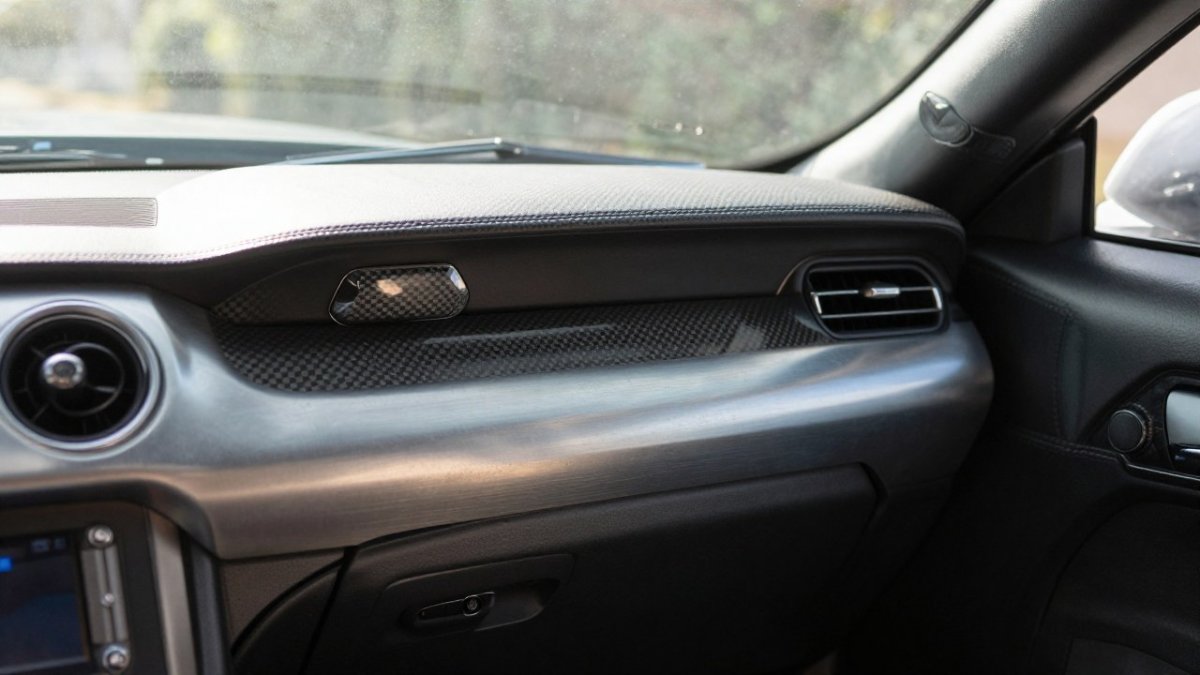
What separates a show-grade kit from a daily-driver kit comes down to three things: cut precision, edge finish, and how the adhesive or mounting hardware behaves in heat. Trim that lifts at the corners after one summer afternoon in a parking lot will cost you points. Ask how the pieces are cut and whether the edges are finished or left raw.
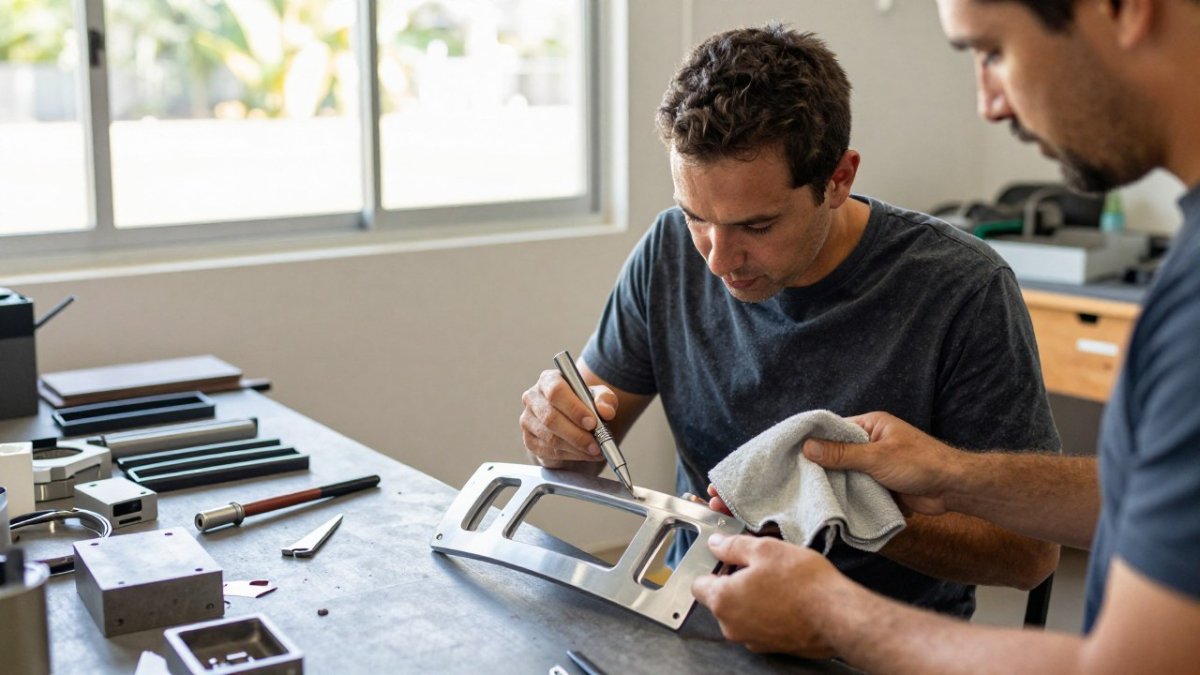
For readers who want to see how precision laser cutting affects final fit, why choose laser cut automotive parts explains the process and what it means for panel alignment.
Ford Mustang Carbon Fiber Interior Parts: What to Expect
Ford Mustang carbon fiber interior parts fall into two camps: real carbon fiber, where the weave is visible under a clear finish, and overlays, which are plastic or metal pieces finished to look like carbon. Both can look sharp. Only one holds up under close inspection at a show.
Real carbon fiber shows a visible weave and is lighter than many alternatives. Overlays use a finish designed to look like carbon, and their pattern can read as artificial up close.
Read the material line of any listing rather than relying on the headline.
Floor Mats, Seats, and Upholstery Upgrades That Hold Up
Floor mats, seat covers, and upholstery are the highest-wear interior items on any Mustang, which makes material choice the whole decision. Carpet mats look correct for a stock-class show car but flatten and stain.
For seats, the trade-off is authenticity versus durability. Factory upholstery keeps the car correct. A well-fitted cover protects the original material and can be pulled for judging.
Check these before buying:
- Whether the mat set is cut for your floor pan and footwell shape
- Whether seat covers are model-specific or universal
- Whether upholstery materials match the original grain and color code
- Whether the part is listed as officially licensed or aftermarket
Dash, Console, Door Panels, and Pedal Covers
Dash and console components carry the most visual weight in a Mustang cabin, because that's where a judge's eye lands first. Door panels and kick panels frame the view from outside the car.
Precision matters more here than anywhere else. A console overlay that sits a millimeter off shows a shadow line that no amount of polishing hides.
Pedal covers deserve a mention for a practical reason: they need to grip.
Using a Ford Mustang Parts Catalog Without Getting Burned
A Ford Mustang parts catalog is only as useful as its fitment data and its licensing disclosures, and those are the two filters to apply to every listing you open. Sort by generation first, then year, then trim, then confirm the part is described as officially licensed if that's what you need. Many catalog pages stop at product categories, so the buying decision often depends on the detailed product information.
How to verify official licensing. Licensing is a brand-use agreement between the part maker and Ford, so the proof lives with the manufacturer, not the marketplace.
Licensed vs. OEM vs. aftermarket, side by side. These three labels answer different questions, and buyers routinely conflate them:
- Branding and authorization: licensed parts may carry Ford trademarks under agreement; OEM parts are Ford-branded because Ford or its supplier built them; aftermarket parts carry no Ford authorization unless separately licensed.
- Fit: OEM fits by definition; licensed parts are design-reviewed but still aftermarket-manufactured, so confirm fitment notes; aftermarket fit ranges from exact to unusable.
- Materials: OEM matches factory material and grain; licensed parts vary by maker and should state material plainly; aftermarket material claims are often the least reliable.
- Warranty: OEM coverage runs through Ford's parts warranty; licensed and aftermarket coverage runs through the part maker, so read the terms rather than assuming Ford backs the part.
- Returns: marketplace returns are governed by the seller, not the licensor, and licensing does not create a return right.
- Price and availability: OEM is typically the most expensive and the most constrained by discontinued part numbers; licensed and aftermarket parts are usually cheaper and easier to find, which is why they dominate catalog listings.
What licensing does and does not guarantee. Licensing confirms brand authorization and, in practice, design review.
Use this checklist before you check out:
- Generation, model year, trim, and body style all listed in the fitment notes
- Manufacturer named, with a product page that repeats the licensed claim
- Material stated plainly (real carbon fiber vs. overlay vs. stainless)
- "Officially licensed" language present if the listing claims it
- Installation method described (adhesive, clip, bolt-in)
- Return policy readable without a support ticket
Watch out: marketplace listings for interior parts often carry no licensing verification at all, and a category page filtered to your exact model year is a good start but does not confirm the part is licensed or that the seller measured anything.
Installing Your Interior Parts and Keeping Them Show-Ready
Most interior trim, pedal cover, and overlay installations are do-it-yourself jobs that call for basic hand tools, a clean surface, and patience rather than a shop visit.
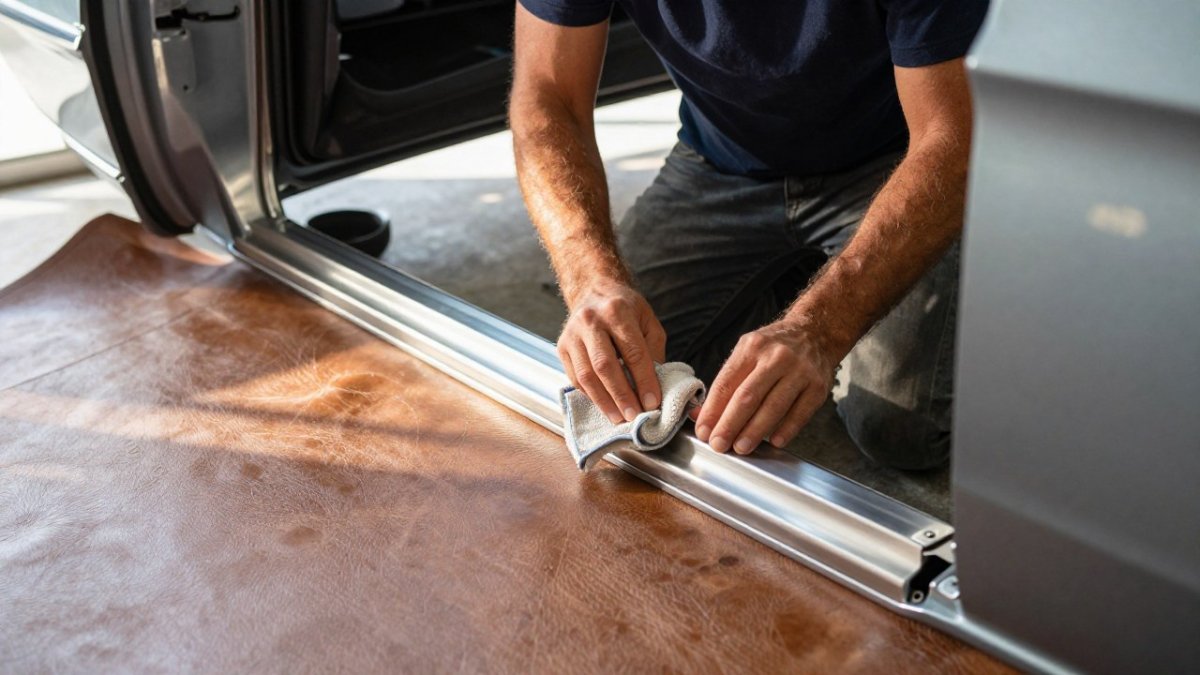
Surface prep decides whether the part stays put. Wipe the mounting area with isopropyl alcohol, let it flash off completely, and test-fit the piece dry before you peel any backing.
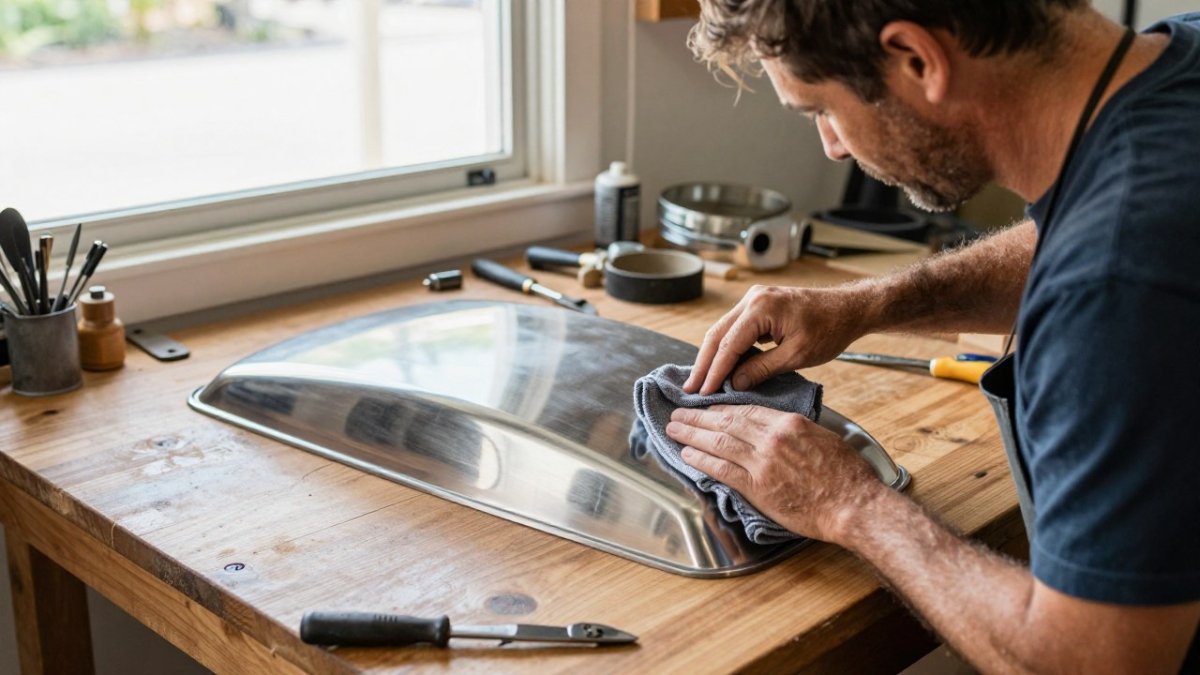
For care, skip harsh interior cleaners on brushed metal and clear-coated carbon. A microfiber cloth and a mild cleaner protect the finish.
Frequently Asked Questions
What is the difference between OEM Mustang parts and licensed accessories?
OEM parts are manufactured by or for Ford and sold through Ford dealerships. Licensed accessories are made by outside companies that hold a formal license from Ford, which allows them to use the brand name and requires the product to meet Ford's specifications. Both differ from unlicensed aftermarket parts, which carry no Ford approval. American Car Craft holds official licenses from General Motors, Ford, and Mopar, so its Mustang interior parts fall into the licensed category.
How do I check whether a Mustang interior part fits my model year?
Start with your vehicle identification number and confirm the generation: S197 covers 2005-2014, S550 covers 2015-2023, and S650 covers 2024 and later. Then check the product listing for an explicit year range and trim level, not a vague phrase like fits most Mustangs. Dash layouts, console shapes, and door panel dimensions change between generations, so a part listed for one generation rarely fits another without modification.
Are Mustang interior trim kits easy to install?
Trim installation methods vary by product, so read the included instructions before starting. Clean the surface with isopropyl alcohol, test-fit the piece before peeling the backing, and press firmly for 30 seconds per section. Parts that replace factory panels, such as door panel inserts or console covers, take longer and may need trim removal tools. Follow the included instructions rather than forcing a piece into place.
How do I clean carbon fiber or stainless steel Mustang interior trim?
Use a microfiber cloth and a pH-neutral interior cleaner for both materials. Avoid abrasive polishes on carbon fiber because they can dull the clear coat, and skip ammonia-based glass cleaners on stainless steel since they leave streaks. For fingerprints on brushed stainless, a dry microfiber wipe usually does the job. Apply a UV-protectant dressing sparingly to carbon fiber if the car sits outside, and reapply every few months.
Where can I buy officially licensed Ford Mustang interior accessories?
Specialty manufacturers that hold a Ford license may sell directly through their own websites. Marketplace listings and general aftermarket retailers may carry licensed products, but the listing does not always state licensing status, so verify before ordering. Ask the seller directly if the product is officially licensed and confirm the return policy.