 Ultimate guide
Why Choose Laser Cut Automotive Parts: Precision That Shows
Last Updated: November 10, 2026
Quick Summary
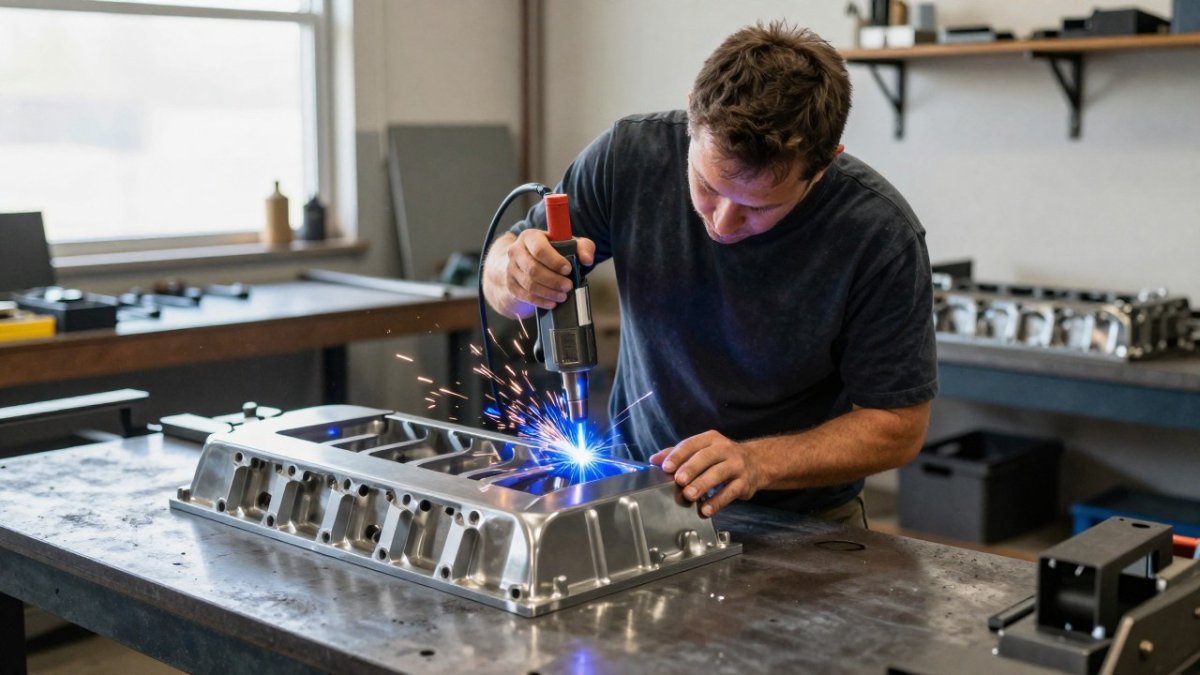
Laser cut automotive parts are shaped by a focused, computer-guided beam that removes metal without touching it, producing clean edges and dimensions that repeat exactly from one unit to the next. The process holds roughly ±0.005 in on thin gauge, needs no hard tooling, and keeps every piece in a matching set in agreement.
- Laser cutting follows a CAD file directly, so accuracy does not drift with tool wear like stamping or punching.
- Fiber laser cutting suits prototype through mid-volume runs and stays competitive into high volume when part count per design is low.
- Stamping becomes economic at high volume, typically tens of thousands of identical pieces and up, but requires hard die cost and weeks of lead time.
- Ask suppliers what tolerance they hold, what alloy and thickness they cut, and what the edge looks like off the machine.
- A heat-affected zone is negligible on thin stainless trim but can affect hardness and corrosion behavior on thicker sections.
Table of Contents
- Why Laser Cut Automotive Parts Earn Their Place on a Show Car
- Automotive Laser Cutting Benefits That Matter in Practice
- Laser Cutting vs Stamping, Waterjet, and Plasma by Production Volume
- Laser-Cut Stainless Steel Car Parts: What the Material Allows
- Custom Laser-Cut Car Parts and the Fitment Question
- Thermal Effects, Edge Quality, and Why Finishing Still Matters
- What Drives Cost and Quality When You Buy Laser-Cut Parts
- Browse American Car Craft's Laser-Cut Upgrades
- Frequently Asked Questions
Why Laser Cut Automotive Parts Earn Their Place on a Show Car
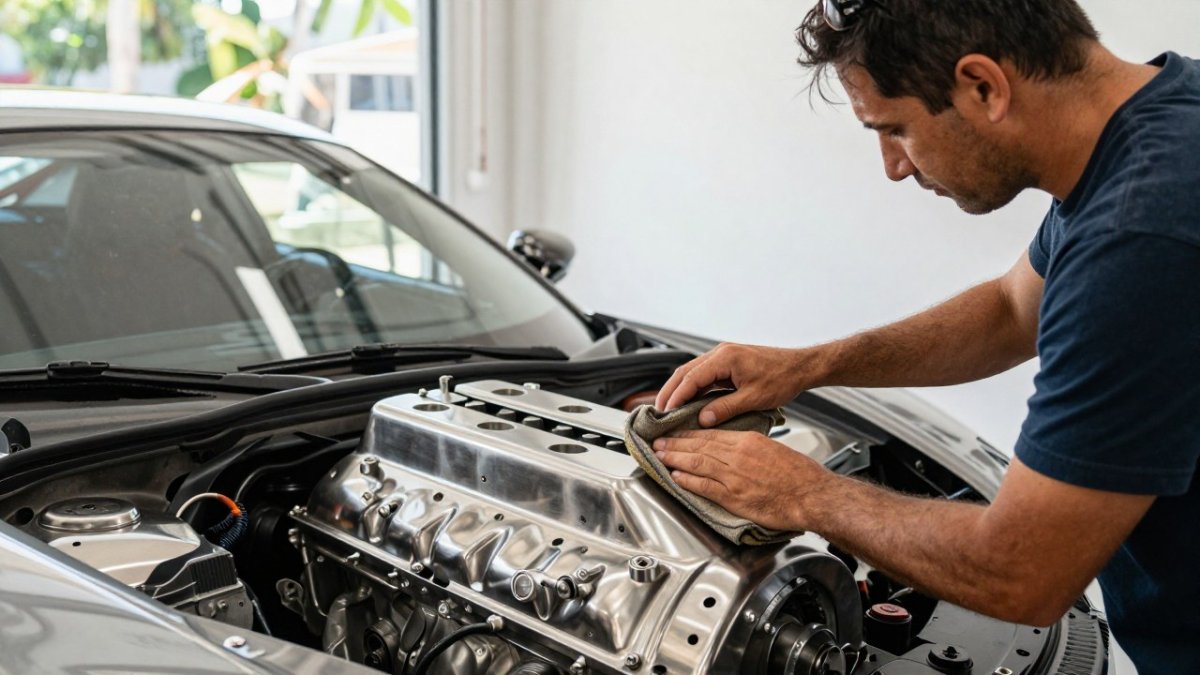
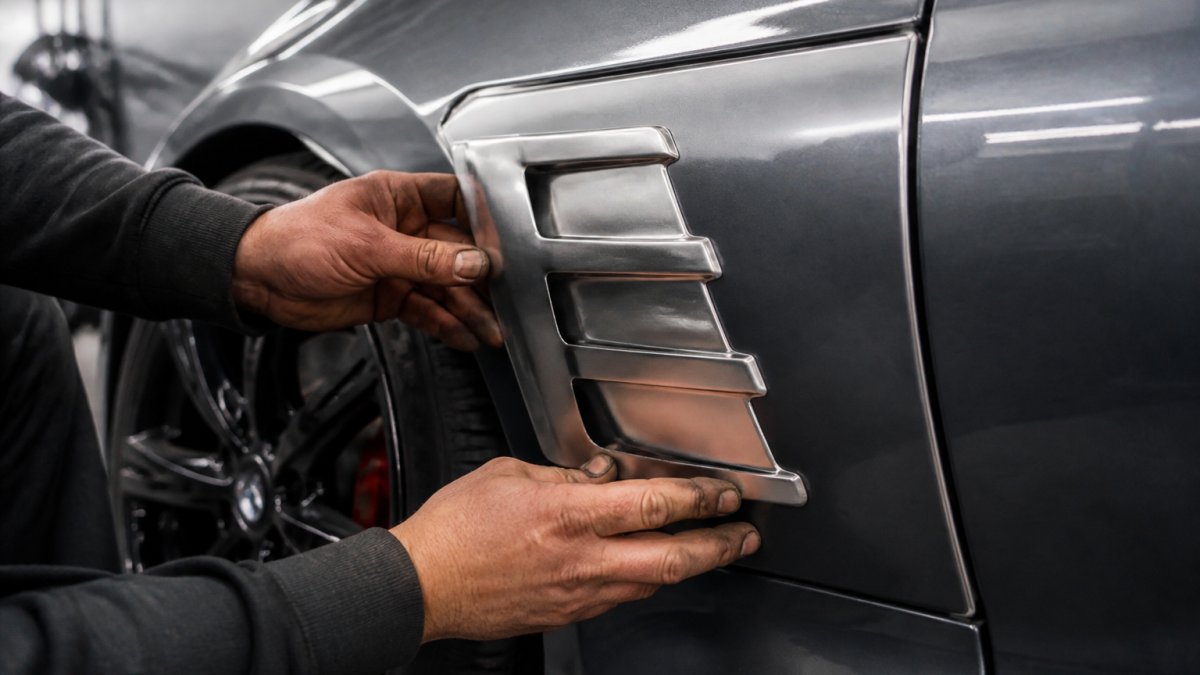
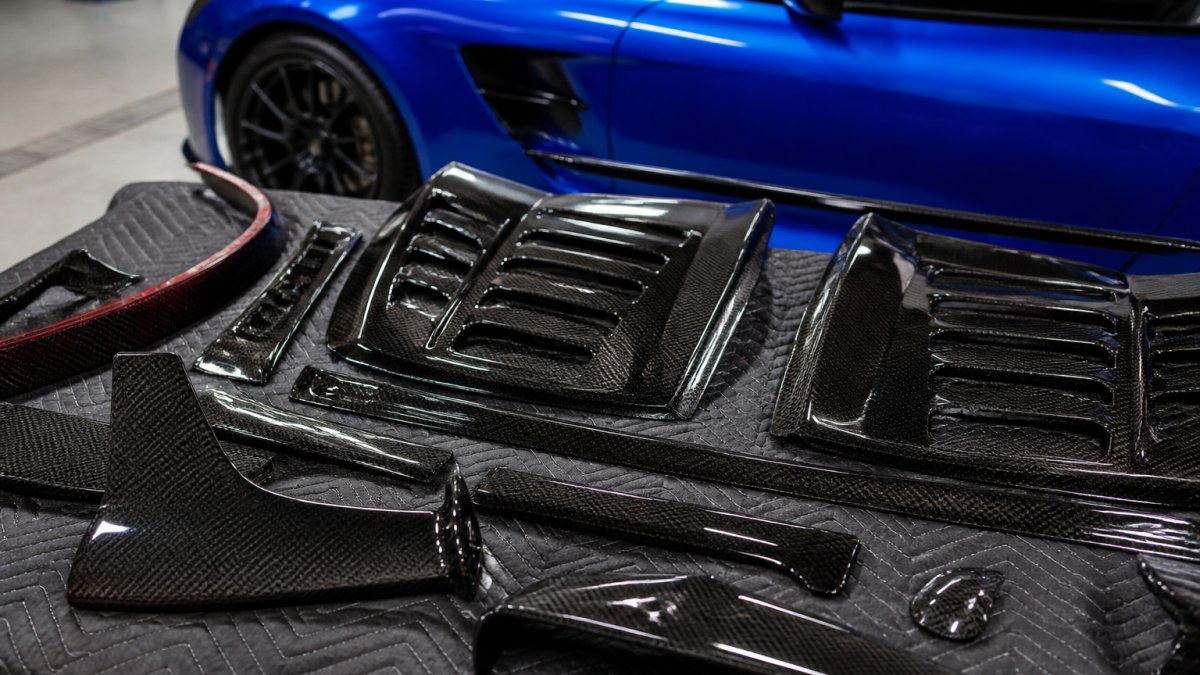
Laser cut automotive parts are components shaped by a focused, computer-guided beam that removes metal without touching it, producing edges clean enough to display and dimensions that repeat exactly from one unit to the next. At American Car Craft, we handcraft stainless steel and carbon fiber accessories, and laser cutting is the reason a trim piece can look like it grew on the car rather than got bolted to it.
Judges at a show walk up to a vehicle and look at the gaps. They look at the reflection running across a polished panel and whether it ripples where two pieces meet. That is where laser cutting earns its keep: consistent kerf, square edges, and repeatable geometry across every unit we ship.
Below, we break down where laser processing genuinely beats the alternatives, where it does not, and how to judge the parts you are about to buy.
Automotive Laser Cutting Benefits That Matter in Practice
Benefits of laser cutting for automotive manufacturing come down to four things: precision, repeatability, material yield, and less time at the finishing bench.
Precision, Repeatability, and Clean Edges
Tight tolerances are the headline. A laser follows a CAD file directly, so dimensional accuracy does not drift with tool wear the way it does in stamping or punching.
For a show car, repeatability matters as much as raw accuracy. If a buyer orders a matching set of engine bay panels, all of them have to agree with each other. A non-contact process removes operator variation from that equation.
Speed, Material Yield, and Less Finishing
Cutting speed on thin sheet is fast, and nesting software packs parts tightly to reduce scrap.
Laser Cutting vs Stamping, Waterjet, and Plasma by Production Volume
Production volume decides the process, not preference. The useful question is not which process is "best" but where each one crosses over on cost, tolerance, and setup time.
| Process | Economic volume band | Typical tolerance on thin sheet | Tooling / setup | Throughput | Edge condition | Best fit |
|---|---|---|---|---|---|---|
| Fiber laser cutting | Prototype through mid-volume; competitive into high volume when part count per design is low | Roughly ±0.005 in on thin gauge, tighter on thin stainless with good nesting | No hard tooling; programming and nest setup measured in hours | Fast on thin sheet; slows as thickness climbs | Clean, minimal burr on thin gauge; light deburr on heavier stock | Custom trim, brackets, panels, low-to-mid runs, design changes |
| Stamping | High volume, typically tens of thousands of identical pieces and up | Tool-dependent; can hold tight tolerances once the die is proven | Hard die cost and lead time measured in weeks; design changes mean die rework | Very high once running | Good, but burr and die wear require monitoring | Identical parts at scale with a stable design |
| Waterjet | Low to mid volume; strong on thick plate and heat-sensitive alloys | Comparable to laser on many materials; excellent squareness on thick stock | No hard tooling; setup similar to laser | Slower on thin sheet; competitive on thick plate | Smooth, no heat-affected zone | Thick sections, alloys that dislike thermal input, one-off plate work |
| Plasma | Low volume, thick stock, structural work | Looser than laser; edge usually needs machining | Low tooling; inexpensive consumables | Fast on thick plate | Rougher, with dross and a heat-affected zone | Heavy structural plate where edge finish is secondary |
Laser-Cut Stainless Steel Car Parts: What the Material Allows
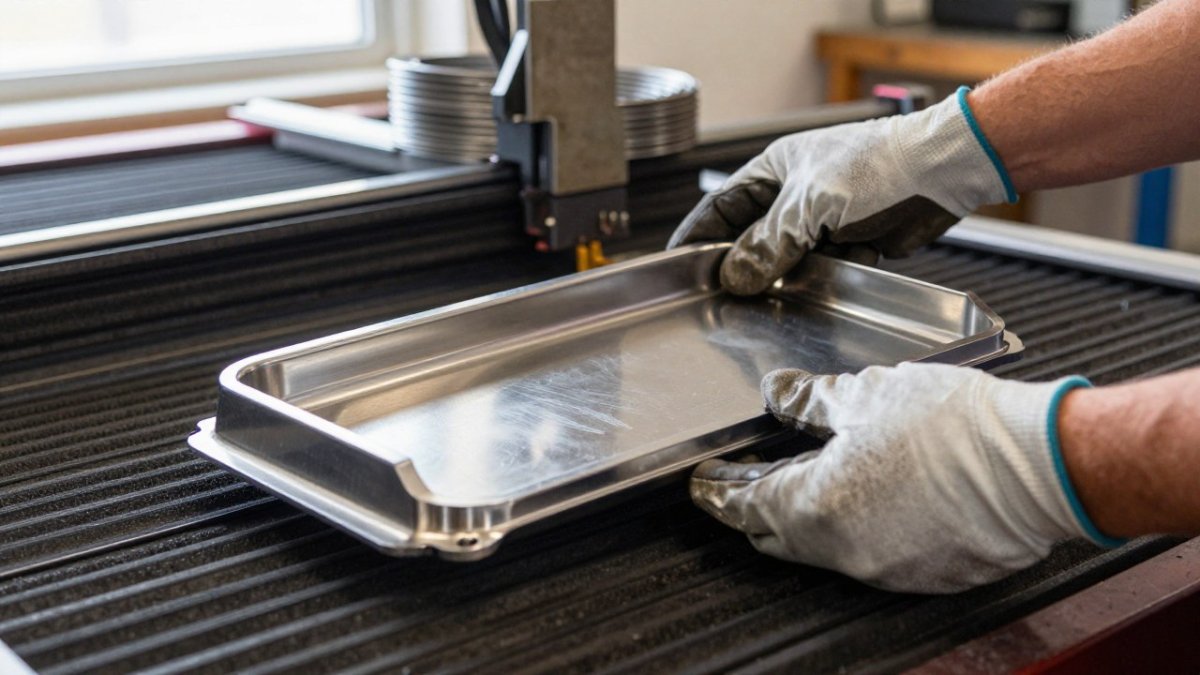
Stainless steel is a common material for laser cutting, and its thickness, tolerance, and edge condition set practical limits. Understanding those limits is what separates a part that polishes out from one that warps on the bench.
Thickness bands and what changes across them. As thickness climbs into heavier sheet and plate, cut speed generally drops and squareness becomes harder to hold.
Reflectivity and alloy behavior. Settings still have to be tuned per alloy and thickness, and the alloy and thickness combination, not the machine alone, determines cut quality.
Custom Laser-Cut Car Parts and the Fitment Question
Custom laser-cut car parts only deliver value if they fit the exact year, trim, and model they were designed for. "Fits most modern muscle cars" is a red flag, not a feature.
Ask any supplier how they verify fitment before shipping, and ask whether the design is licensed for the vehicle it claims to fit.
Officially licensed products from General Motors, Ford, and Mopar are offered by American Car Craft.
Thermal Effects, Edge Quality, and Why Finishing Still Matters
A heat-affected zone is the thin band of metal beside the cut whose microstructure the laser has altered. On thin stainless trim it is negligible; on thicker sections it can affect hardness and corrosion behavior at the edge. Because edge hardness and corrosion behavior can shift with the heat-affected zone, checking cut dimensions and edge consistency helps confirm that the finished part meets its requirements, a point worth keeping in mind alongside Rhonda's Eclectic Utopia.
What Drives Cost and Quality When You Buy Laser-Cut Parts
Cost comes from material grade and thickness, cut length and part complexity, nest yield, finishing labor, and volume. A complex profile with many small holes consumes more machine time than a simple rectangle of the same area.
Ask suppliers three questions before you buy:
- What tolerance do you hold on this part, and is it written down?
- What alloy and thickness are you cutting, and is it certified?
- What does the edge look like straight off the machine?
Browse American Car Craft's Laser-Cut Upgrades
The gap between a modified car and a show car is usually measured in millimeters. American Car Craft handcrafts premium stainless steel and carbon fiber accessories in Hudson, Florida, with officially licensed products from General Motors, Ford, and Mopar. Our pieces are designed for do-it-yourself installation.
Browse our collection and pick the upgrade that suits your car.
Your car already has the lines. What it needs is trim that matches them, cut to the same standard the factory used. American Car Craft brings over 30 years of handcrafting experience, precision laser-cut stainless steel and carbon fiber construction, official licensing from General Motors, Ford, and Mopar, and easy do-it-yourself installation to every order. Get started with American Car Craft and give your build the fit and finish judges notice.
Frequently Asked Questions
What are the benefits of laser-cut automotive parts?
The main benefits of laser cutting are dimensional accuracy and repeatability from one part to the next. A laser cuts without touching the workpiece, so there is no tool wear to drift over a production run and no mechanical force bending thin sheet metal. That means complex geometries and intricate designs can be cut in a single pass, secondary operations and hand finishing drop, and material yield improves because parts can be nested tightly on the sheet.
Are laser-cut car parts more precise than traditionally cut parts?
In most cases, yes. Laser cutting holds tight tolerances on sheet metal and produces a narrow heat-affected zone, so edges stay square and dimensions stay consistent across a run. Stamping depends on tooling that wears and needs maintenance, and plasma leaves a wider kerf and rougher edge that usually needs cleanup. Waterjet is accurate but slower on thin sheet. The practical difference shows up in fitment: laser-cut trim and brackets seat without trimming, which is exactly what owners of specific Camaro, Corvette, or Mustang model years need.
What should you check before buying custom laser-cut car parts?
Confirm three things. First, the exact year, model, and trim the part is cut for, since a panel cut for one bumper shape will not align on another. Second, whether the seller states the material and thickness, because 304 stainless behaves differently from mild steel in an engine bay. Third, how the edges are finished after cutting, since a raw laser edge on stainless may need deburring or polishing before it looks show-ready. Ask about the return process too, so a fitment surprise does not become your problem.
Do laser-cut automotive parts require special installation?
Check whether the seller supplies model-specific instructions, and test-fit the part before removing any backing tape so you can adjust placement without wasting adhesive.